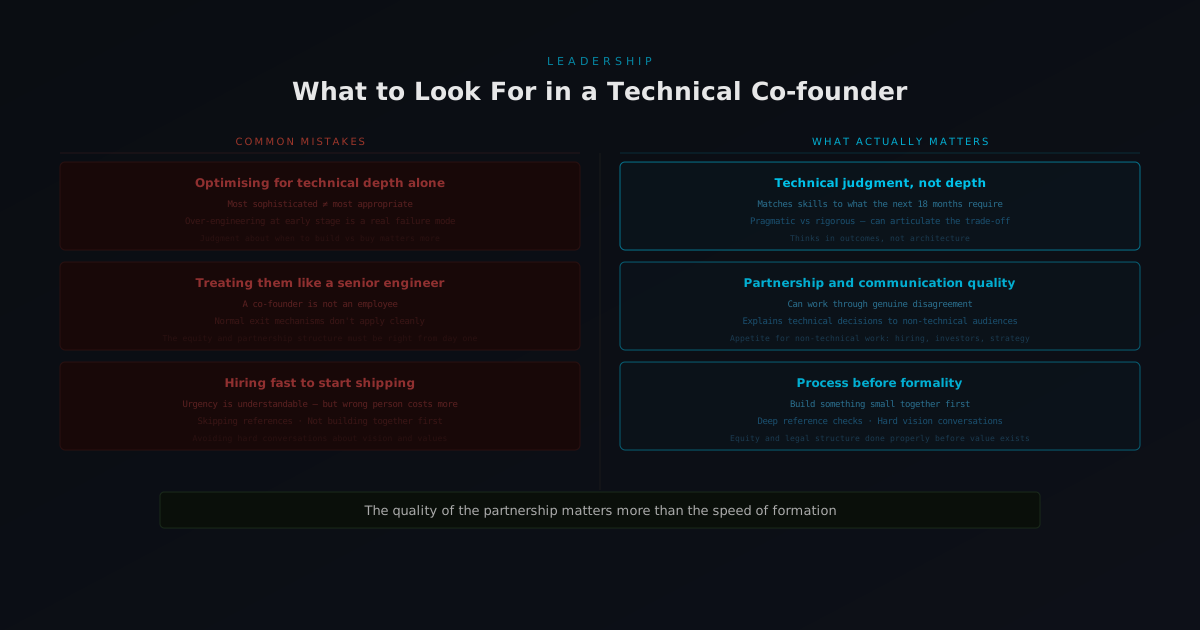
Most founders evaluating a technical co-founder make the same mistake: they optimise for technical ability. That's necessary but not sufficient. The technical co-founder relationship is one of the most high-stakes partnerships in a company's early life, and the things that make it work or fail are rarely about code.
You need someone who can build what the business requires for the next 18 months. That doesn't mean the most technically sophisticated person you can find. It means someone whose skills match the current technical requirements, and who has the judgment to know when to use off-the-shelf rather than build from scratch.
Over-engineering at early stage is a real failure mode. A technical co-founder who wants to design a perfect architecture before anything ships is wrong for the context. Technical judgment, when to be rigorous and when to be pragmatic, matters more than raw depth.
A co-founder is not an employee. The normal exit mechanisms don't apply cleanly. You're making a long-term commitment that will outlast most early relationships in the company, and the structure of that commitment (equity, vesting, decision rights) becomes very visible when things get hard.
The question to ask honestly: can you work through genuine disagreement with this person? Not polite disagreement, the kind that happens when the company has $200k in the bank, one key customer, and opposing views on what to build next. That conversation will happen. The question is whether the relationship can survive it.
Vesting schedules, cliff periods, buyout provisions, and decision-making rights need to be documented before there is anything to fight over. More co-founder relationships end badly because of equity disputes than because of technical disagreement.
The legal and structural work is cheap compared to the cost of getting it wrong eighteen months into the relationship. Do it properly, with proper advice, before the company has value worth arguing about.
Reference checks with people who have worked closely with the candidate are more valuable than any interview. Ask specifically: how did they behave when the project was behind and the pressure was high? When they disagreed with the direction, how did they handle it?
Build something small together before formalising the arrangement. A two-week technical sprint reveals more about how someone works, communicates, and makes decisions under pressure than any amount of conversation about it.
Hiring fast because you need to ship. The urgency to start building is understandable. Every week without a technical co-founder feels like a week of lost ground. But the wrong technical co-founder, one who is wrong for the stage, the culture, or the partnership, costs more than the delay of finding the right one.
Take the time. Be specific about what the role requires at this stage. Have the hard conversations about vision, working style, and values before you share a cap table. The quality of the partnership will matter more than the speed of formation.