Every failed project has a post-mortem. Most of them blame process, tooling, or team capacity. A few acknowledge poor requirements or changing scope. Almost none name the real culprit: the decisions, and non-decisions, made above the project level.
Projects don't fail in isolation. They fail because of conditions that leaders created, tolerated, or failed to change in time.
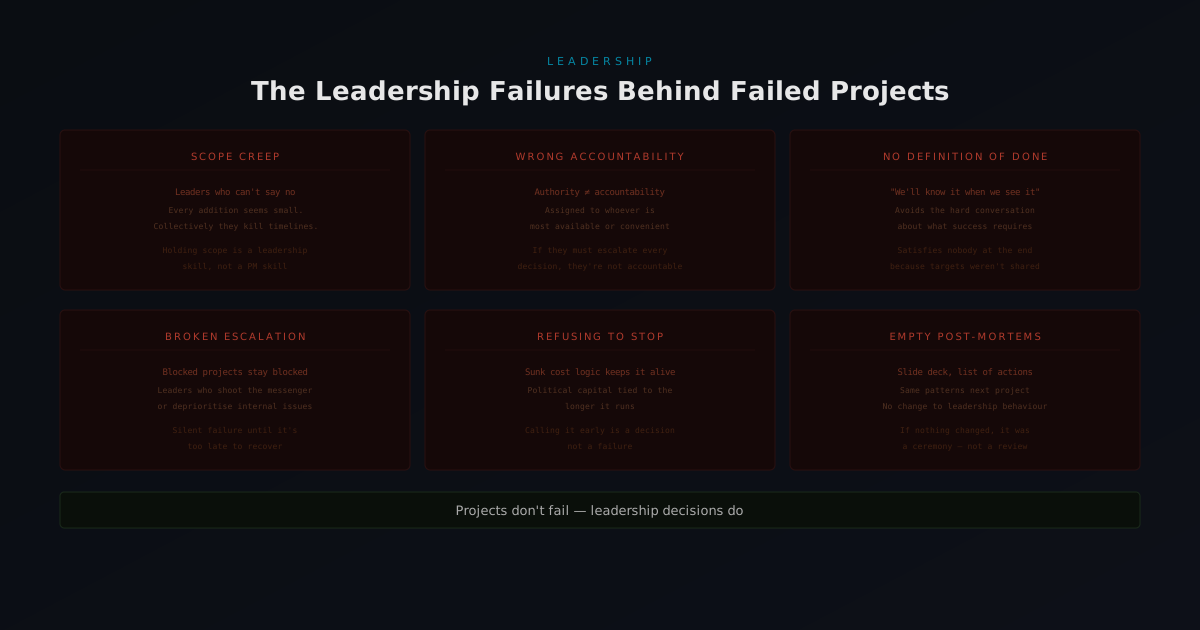
Projects grow because someone keeps saying yes. Usually that someone is a senior leader trying to keep stakeholders happy, avoid conflict, or demonstrate responsiveness. Each addition seems small. Collectively, they extend timelines, strain teams, and dilute the original purpose.
The ability to hold scope to say "not in this release" and mean it, is a leadership skill. It's not a project manager's job to fight senior stakeholders for boundaries the project manager didn't set.
Accountability is often assigned to whoever is most available, most junior, or most convenient. Real accountability means the person answerable for the outcome has the authority to make the decisions that shape it. When those are different people, when accountability and authority are separated, the project will fail.
If the person "accountable" has to escalate every material decision, they're not accountable. They're a reporting mechanism. That distinction matters.
"We'll know success when we see it" is a recipe for disappointment. Leadership teams that avoid defining success are usually avoiding the hard conversation about what success actually requires, the resource commitment, the trade-offs, the things they'd have to stop doing.
Projects that run without a clear target satisfy nobody at the end. Everyone had a different picture. None of those pictures were discussed at the start.
Blocked projects stay blocked because teams can't escalate effectively or don't feel safe doing so. Leaders who are unavailable, who shoot the messenger, or who deprioritise internal escalations create the conditions for silent failure.
By the time a problem surfaces through the normal review cycle, weeks of recoverable time have been lost. The faster escalations work, the more options you have.
Sunk cost logic keeps dying projects alive. The longer they run, the more political capital is tied to them. Leaders who can't make the call to stop waste resources, destroy team morale, and deny the organisation the chance to redirect effort and learn faster.
Calling a project early is a decision, not a failure. The failure is continuing it past the point where honest assessment would have stopped it.
Most post-mortems produce a slide deck and a list of recommendations. Months later, the same patterns appear in the next project. Real post-mortems produce changes to process, accountability structures, or leadership behaviour, not just documentation of what went wrong.
If the post-mortem doesn't result in at least one decision that changes how leaders operate, it was a ceremony, not a review.
The things that most reliably lead to project failure, poor accountability, undefined success, no mechanism to stop, are all above the project level. Fixing them is not a project manager's job. It is a leadership job.
The best leaders I've worked with review their projects differently. They ask not just how the project is tracking but whether the conditions for success still exist. They examine their own decisions, not only the team's execution.
A project failing is an outcome. The causes are usually leadership decisions made weeks or months earlier, and the most useful question is always: what would we have had to do differently, and at what point?