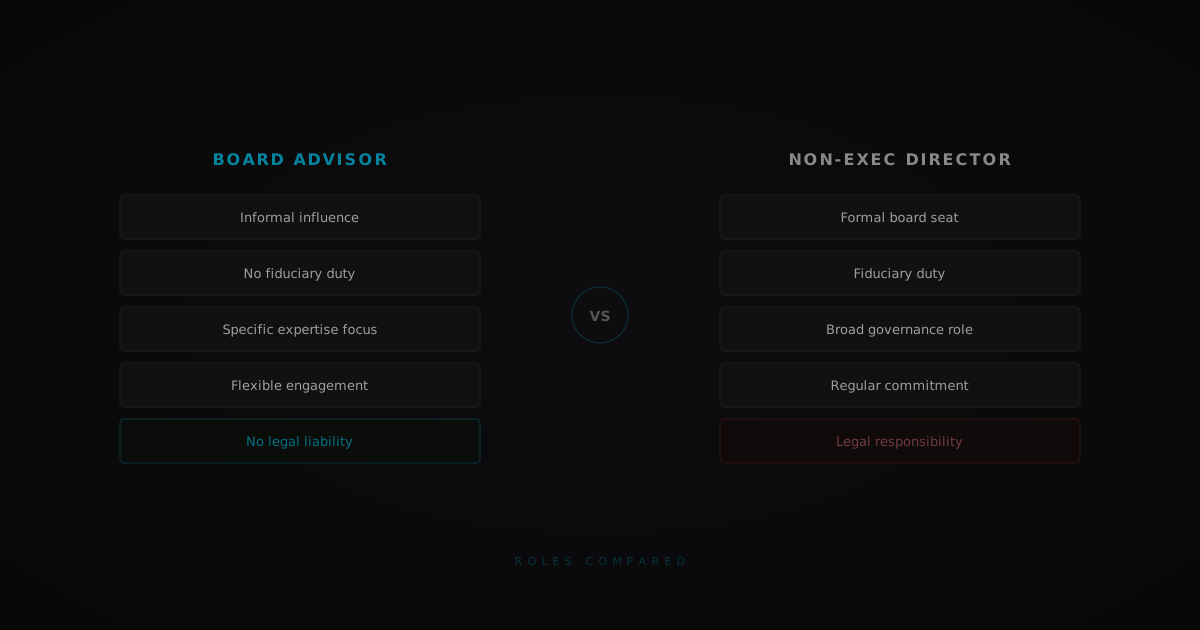
The advisory board is one of the most misused structures in early-stage companies. Almost every growth-stage company has one. Very few get meaningful value from it. The idea is sound, experienced operators and domain experts who can give the leadership team access to knowledge, networks, and perspective that would otherwise take years to accumulate. In practice, advisory boards are usually assembled for the wrong reasons, managed badly, and quietly allowed to become irrelevant.
Why most advisory boards fail
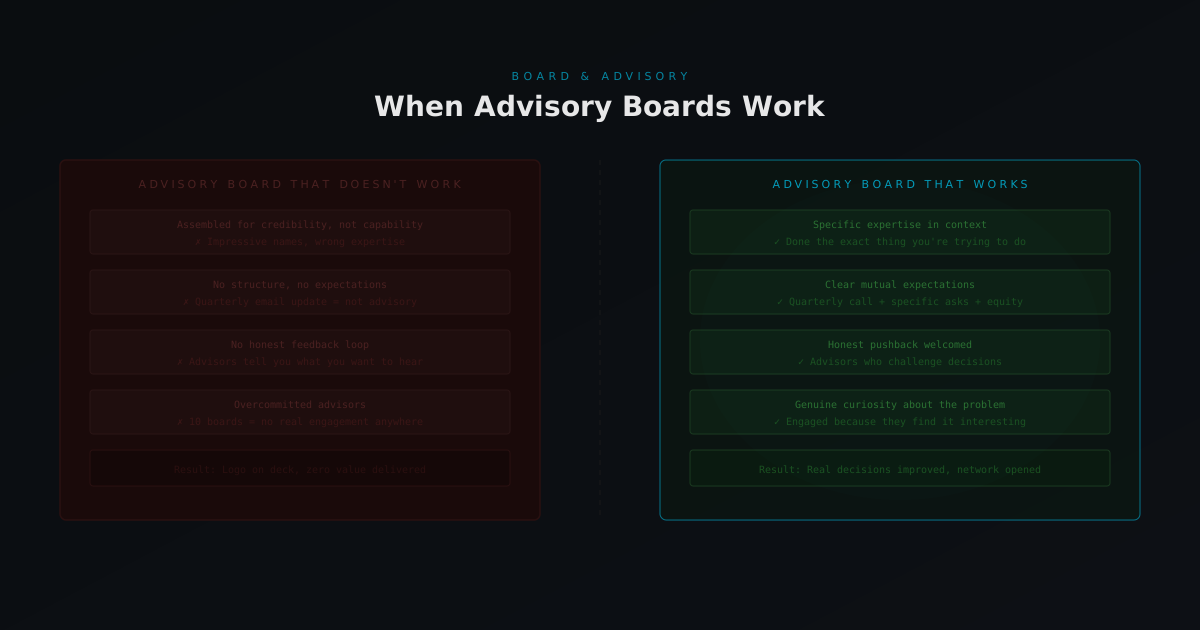
The most common mistake is assembling an advisory board for credibility rather than capability. The goal is to have impressive names to show investors or customers, not to get genuine help. This produces advisors who don't have the specific expertise the business actually needs, who were never really asked to engage deeply, and who have no meaningful relationship with the company beyond a logo on a pitch deck.
The second failure mode is structural: no clear expectations, no regular contact, and no mechanism for the relationship to generate value. An advisor who meets the founding team once at a dinner and then receives a quarterly update email is not an advisor. They're a name with a 0.1% option grant they'll never exercise.
What value advisors actually provide
When advisory relationships work well, they provide three things: specific expertise the company lacks internally, warm introductions to people and opportunities the company can't access easily, and honest perspective on decisions, including pushing back when the leadership team is making a mistake.
The third is the hardest to get and the most valuable. Advisors who tell you what you want to hear are useless. Advisors who have enough investment in your success, enough trust, and enough confidence to tell you difficult things are rare and worth treating accordingly.
The right structure for an advisory relationship
Every advisory relationship should be explicit about three things: what the advisor brings (specific capability and network), what the company expects (time, engagement, introductions, review sessions), and what the advisor gets (equity, cash, access). Vague agreements produce vague engagement.
A good structure typically looks like: quarterly call of 60-90 minutes with a real agenda, ad hoc availability for specific questions or decisions, one or two warm introductions per year to the advisor's network, and a share of equity that vests over time. The equity should be meaningful enough to create genuine alignment, not token compensation for putting your name on a website.
Who to recruit — and who to avoid
The best advisors are people who have done the specific thing you're trying to do, scaled a similar business, navigated a particular market, built the kind of product you're building. Generic "experienced executives" who've been successful in vague ways are usually not useful. Specific expertise in context is what creates value.
Watch out for advisors who are over-committed. A senior operator sitting on ten advisory boards is probably not going to be meaningfully engaged with any of them. Look for people who genuinely find your problem interesting and have enough time to actually engage. The signal is how curious they are about what you're doing, not how impressive their CV is.
Managing advisors for maximum value
The founder's job is to make advisory relationships productive. That means preparing properly for every interaction: bring a specific question or decision, not a general update. It means being honest about what's going wrong, not just reporting successes. And it means following up, advisors who give you a useful introduction or a challenging piece of feedback and never hear what happened will disengage.
The best advisory relationships become genuinely collaborative over time. The advisor becomes a trusted sounding board on the hardest decisions. They advocate for you in their network because they've seen how you operate. They make introductions because they want to, not because they have to. Getting to that kind of relationship requires treating advisors like real partners, not like decorative endorsements.
When to refresh the board
Advisory boards have natural lifecycles. An advisor who was perfect for your Series A may not have the right expertise for your Series B. As the business evolves, the advisory board should evolve too. This means having honest conversations about whether relationships are still productive, and being willing to transition advisors gracefully when they've served their purpose. The advisors who built value in the early stage deserve to be celebrated, not kept on indefinitely out of politeness.