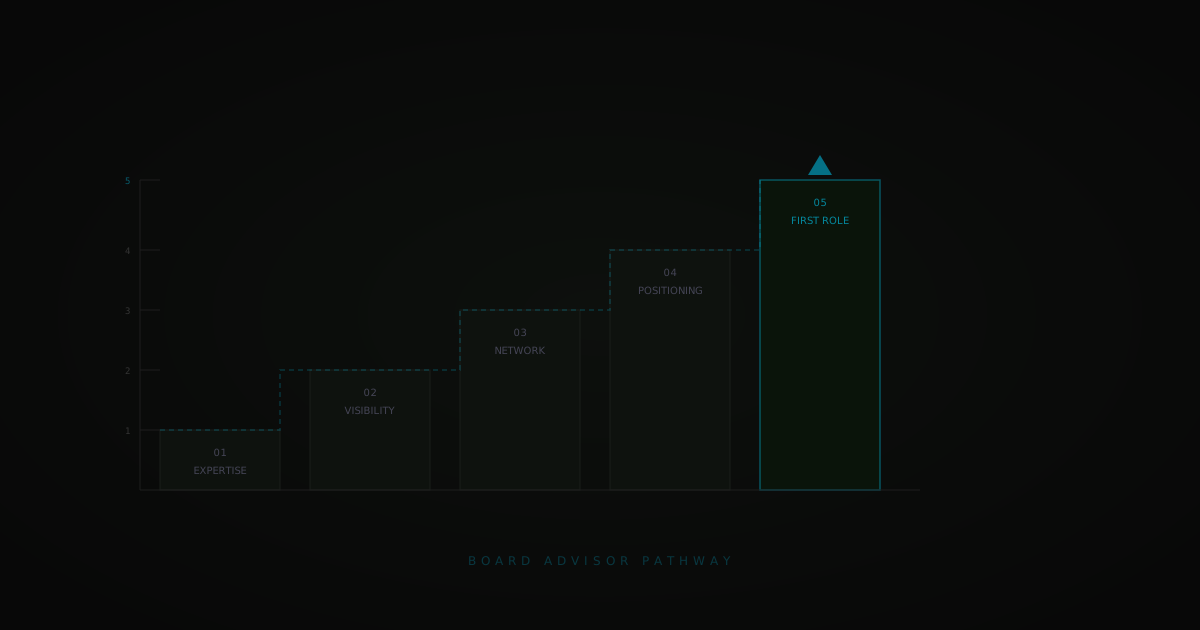
Landing your first board advisor role is one of those milestones that looks straightforward from the outside until you actually try to do it. The advice you'll find online is either too vague ("build your network") or too transactional ("join an advisory board matching platform"). Neither captures what actually works. Having held advisory roles across the UK, Spain, and the Middle East, and having brought advisors onto boards myself, I've seen the pattern clearly: the people who land their first board advisor role are almost never the most credentialed. They're the most useful.
Why "waiting to be discovered" doesn't work
The implicit assumption many experienced executives carry is that their track record will speak for itself. That board positions will come through reputation alone, once they hit a certain seniority. This assumption is wrong, and it's the reason many highly qualified people go years without landing a single advisory role.
Board advisors are not hired. They are invited. And invitations happen through relationships, not applications. If you're waiting for someone to find you, you're waiting for a system that isn't looking for you. The organisations that would benefit most from your expertise don't know they need you yet because you haven't shown them.
"The people who land their first board advisor role are almost never the most credentialed. They're the most useful."
Step 1: Define your advisory thesis
Before you approach a single company or founder, you need a clear answer to the question: what specific problem do I solve, for what kind of organisation, at what stage?
The mistake most people make is positioning themselves too broadly. "Experienced executive with cross-functional expertise" tells a founder nothing. "I help Series A SaaS companies build their first enterprise sales motion" tells them exactly whether you're relevant to them.
Your advisory thesis should have three components:
- Your specific expertise, not your job title, but the actual skill or knowledge that would move the needle for a business
- The company profile you're most useful to — stage, sector, geography, business model
- The problem you help them solve — ideally something they are actively trying to solve right now
A sharp thesis makes every subsequent conversation more productive. It also helps founders remember you because you're not another generic "senior advisor," you're the person who does a specific thing they need.
Step 2: Go where early-stage founders are
Your first board advisor role is most likely to come from an early-stage company. Not because large companies don't have advisory boards, they do, but because at Series A and B stage, founders are actively building out their advisory network and are more open to first-time advisors who bring relevant expertise.
This means you need to be in places where those founders operate:
- Startup accelerator demo days and events (Startupbootcamp, Techstars, Y Combinator regional events)
- Sector-specific founder communities, the best are often private Slack groups or WhatsApp communities
- University startup programs, IE, ESADE, LBS, and similar schools run founder cohorts that actively seek experienced advisors
- LinkedIn, specifically engaging thoughtfully with founder content rather than broadcasting your own
The goal at this stage is not to pitch yourself. It's to be genuinely helpful in public, commenting with real insight, sharing useful information, connecting people who should know each other. Generosity is the highest-converting advisory acquisition strategy.
Step 3: Have the right first conversation
When you do get in front of a founder or CEO who seems like a fit, resist the urge to sell yourself. Instead, ask good questions about their biggest current challenges and, critically, offer a useful observation or two before the meeting ends. Not a full consulting engagement. Just a glimpse of how you think.
This "free sample" model is how most advisory relationships begin. You're not trying to close a role in meeting one. You're demonstrating that you're the kind of person they'd want in the room when difficult decisions get made.
A common cadence that works well:
- First meeting: listen, ask questions, offer 2–3 high-quality observations
- Follow up with something relevant, an article, an introduction, a connection they mentioned needing
- Third touchpoint: if there's a natural fit, the conversation about a more formal advisory relationship often surfaces on its own
Step 4: Understand what you're agreeing to
Before you say yes to any advisory role, make sure you're clear on the terms. Many first-time advisors underestimate the variation in what "board advisor" can actually mean. Some roles are genuinely lightweight, a quarterly call and occasional introductions. Others expect monthly availability, attendance at board meetings, and active involvement in fundraising.
Key things to clarify before committing:
- Time commitment expected (hours per month, meeting cadence)
- Compensation structure, equity only, cash retainer, or hybrid
- Whether there's a formal advisor agreement or just a handshake
- Confidentiality obligations and any exclusivity clauses
- What success looks like from the company's perspective
The differences between a board advisor and a Non-Executive Director are significant, particularly around legal responsibility and fiduciary duty. Make sure you know which one you're taking on.
One thing most people get wrong
The most common mistake I see is treating the advisory role as a credential rather than a relationship. People chase the title — "board advisor at X" without thinking clearly about whether the company is one they can genuinely help, whether they respect the founder, and whether the relationship has the right conditions to be productive.
A bad advisory relationship costs you more than no advisory relationship. You'll invest time in a company that doesn't use your input well, you'll struggle to exit gracefully, and, worse, you'll have your name attached to their outcomes regardless of your involvement.
Be selective. The right first role is one where your contribution is valued, the founder listens, and the relationship has the potential to be genuinely useful to both parties. That's the role worth holding out for.
Thinking about taking on your first advisory role?
If you're navigating this decision and want a sounding board,
I'd be happy to have a conversation →