I've held both roles. I've been introduced at events as a "board advisor" when I was actually a Non-Executive Director, and I've seen the reverse, people carrying NED titles without the legal responsibilities that come with them. The confusion is widespread, and it costs both sides.
If you're a founder deciding how to structure your board, or a senior leader figuring out which path to pursue, the difference between a board advisor and a Non-Executive Director (NED) matters more than the job title suggests.
The legal distinction — and why it's the one that matters most
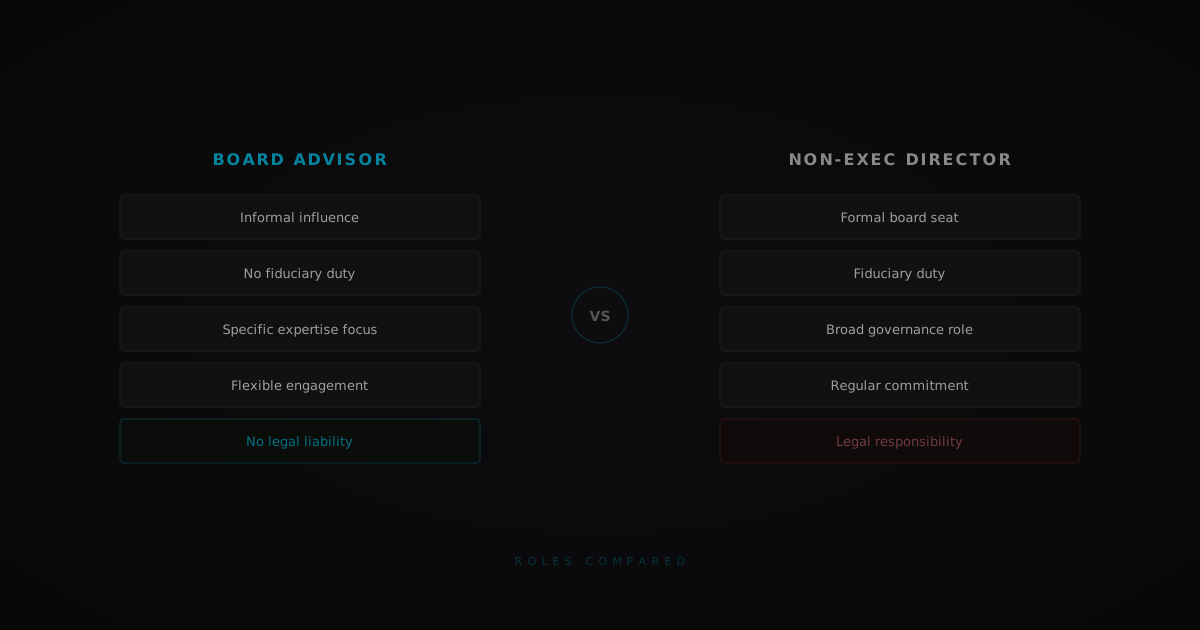
A Non-Executive Director is a formal director of the company. Their name appears at Companies House (in the UK) or the equivalent registry in other jurisdictions. They have legal fiduciary duties to the company, they must act in its best interests, avoid conflicts of interest, and can be held personally liable if they fail to do so.
A board advisor has none of these legal obligations. They are not a director. They do not vote at board meetings. They are not registered anywhere. Their role is entirely informal, defined by whatever agreement exists between them and the company, and nothing else.
A NED can be sued. An advisor usually cannot. That distinction shapes everything about how each role operates in practice.
This isn't a reason to avoid one over the other, it's simply a reason to be honest about which one you're signing up for, and what the expectations on both sides actually are.
What each role looks like in practice
A Non-Executive Director attends formal board meetings, typically four to eight times per year, reviews board papers in advance, challenges management on strategy and performance, and contributes to decisions on matters like executive remuneration, risk, and governance. In a well-run business, a NED is supposed to be an independent voice. In practice, that independence varies.
A board advisor operates more loosely. They might have a monthly call with the CEO, attend a quarterly offsite, review a pitch deck before it goes to investors, or make an introduction at a critical moment. The value they add is usually specific: a network, a skill set, a perspective that the founding team lacks. There are no formal deliverables. There is no board pack.
This informality is the advisor's biggest strength, and its biggest weakness. The best advisory relationships are built on genuine trust and a specific, useful gap being filled. The worst are title arrangements that benefit the advisor's LinkedIn profile more than the company.
The quick comparison
| Board Advisor | Non-Executive Director | |
|---|---|---|
| Legal status | None, informal role | Formal director, registered |
| Fiduciary duty | No | Yes, legally liable |
| Voting rights | No | Yes (at board level) |
| Time commitment | Flexible, typically 2–5 hrs/month | Structured — 1–3 days/month |
| Compensation | Often equity (0.1–0.5%), sometimes cash | Annual fee (£10k–£60k+) ± equity |
| D&O insurance | Not required | Usually required, insist on it |
| Typical company stage | Early-stage, pre-Series A | Series A onwards, or established |
Which one does your business actually need?
For early-stage startups, board advisors are almost always the right first move. You need specific expertise, introductions, and a sounding board, not governance infrastructure. A good advisor costs you a small slice of equity and gives you access to a network or capability you couldn't otherwise afford.
As you scale, typically from Series A onwards, or when you have institutional investors involved, the need for proper governance increases. Investors will often require or expect independent NEDs on the board. At this point, a formal NED brings something an advisor cannot: accountability, legal standing, and a vote when it matters.
The mistake I see most often is founders appointing NEDs too early, when what they actually need is a few good advisors. Formal governance is overhead. Before you have product-market fit, you don't need a quarterly board cycle, you need people who'll answer the phone on a Thursday afternoon when something breaks.
Which role should you pursue?
If you're a senior leader looking to build a portfolio of non-executive work, the honest answer is: start with advisory roles, and be deliberate about which NED positions you accept.
Advisory roles are lower friction, for both sides. They let you test the relationship, demonstrate value, and build a track record without taking on the legal exposure of a directorship. Many NED appointments begin as advisory relationships that evolved naturally over time.
When you do take on a NED role, make sure three things are in place before you sign: Directors and Officers (D&O) insurance, a clear letter of appointment defining your role and responsibilities, and a genuine understanding of the company's financial position. The legal liability is real. So is the reputational one.
The best non-executive careers are built on a small number of high-quality relationships rather than a long list of impressive titles. One NED role where you genuinely move the needle is worth more, professionally and commercially, than five advisory positions where you're a logo on a website.
Thinking about board or advisory work?
I work with founders on structuring their advisory boards, and with senior leaders building their first non-executive portfolio. Let's talk →