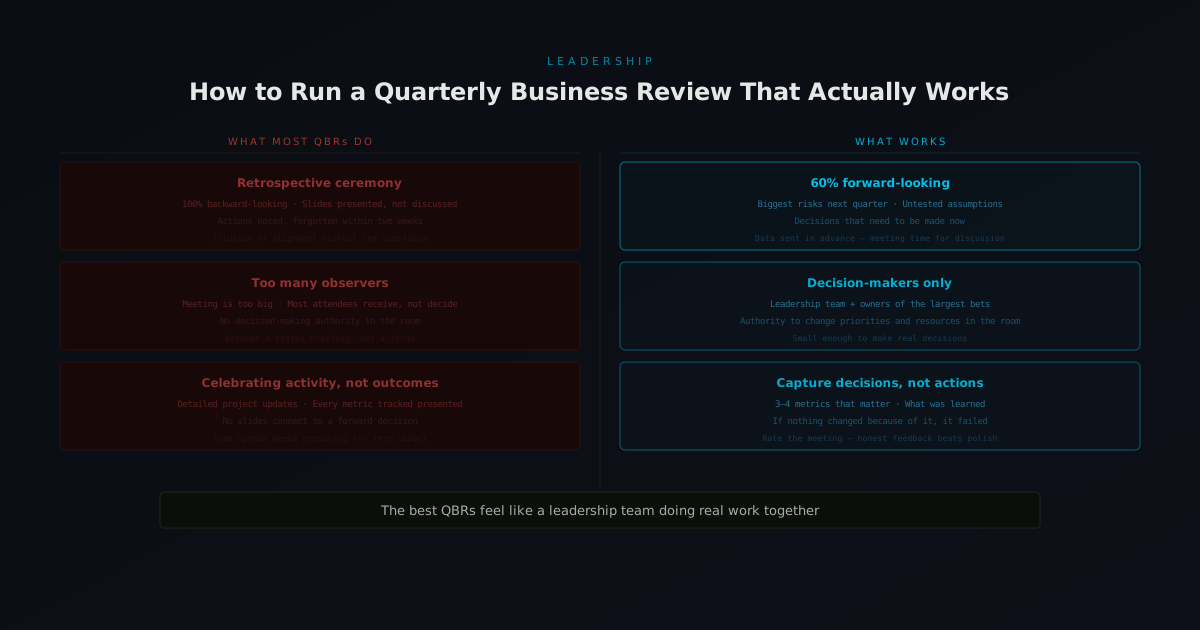
Most quarterly business reviews are retrospective ceremonies. Teams prepare slides showing what happened over the last three months. Senior leaders ask clarifying questions. A few actions are noted at the end. Two weeks later, those actions have evaporated.
Done well, a QBR is one of the highest-leverage leadership meetings in the calendar. Done poorly, it's an expensive distraction that produces the illusion of alignment without any of the substance.
They look backwards almost exclusively. They celebrate wins, explain misses, and move on. The problem isn't reviewing the past, it's that the review rarely drives forward decisions.
A QBR should answer one question above all others: given what we now know, what should we do differently in the next quarter? If the meeting doesn't change any decisions or priorities, it failed, regardless of how well it was presented.
The QBR is not a status update for executives. It's a decision-making forum. The people in the room should be the people with authority to change priorities, allocate resources, or restructure how teams are working.
If most attendees are there to observe or receive information, the meeting is too big. Keep it tight: the leadership team plus the owners of the largest bets for the quarter ahead.
Cover:
Skip:
At least half the QBR should look forward. What are the biggest risks to the next quarter? What assumptions are embedded in the current plan that haven't been tested? What would change the direction if it turned out to be wrong?
Leaders who run QBRs well treat them as stress-testing sessions, not report-back sessions. The best conversations I've seen in a QBR start with: "What are we most likely to get wrong about the next quarter?" That question surfaces more useful information than an hour of retrospective slides.
Q3 and Q4 QBRs in particular should be feeding annual planning directly. The insights from a well-run QBR, what's working, what isn't, where the real opportunities have emerged, are the inputs planning needs. If your QBR and your planning cycle operate independently, you're doing extra work for half the value.
The best QBRs I've run feel like a leadership team doing real work together, reasoning through complexity, making calls with incomplete information, holding each other to higher standards. Not a group receiving a briefing and agreeing to meet again next quarter.