Sprint reviews are supposed to be one of the most valuable rituals in any product team's calendar. In practice, most of them have become something else entirely, a performative demo where the team shows what they built, stakeholders nod, and no one changes their plans as a result.
If your sprint reviews feel like a reporting exercise rather than a learning exercise, the ceremony has drifted from its purpose.
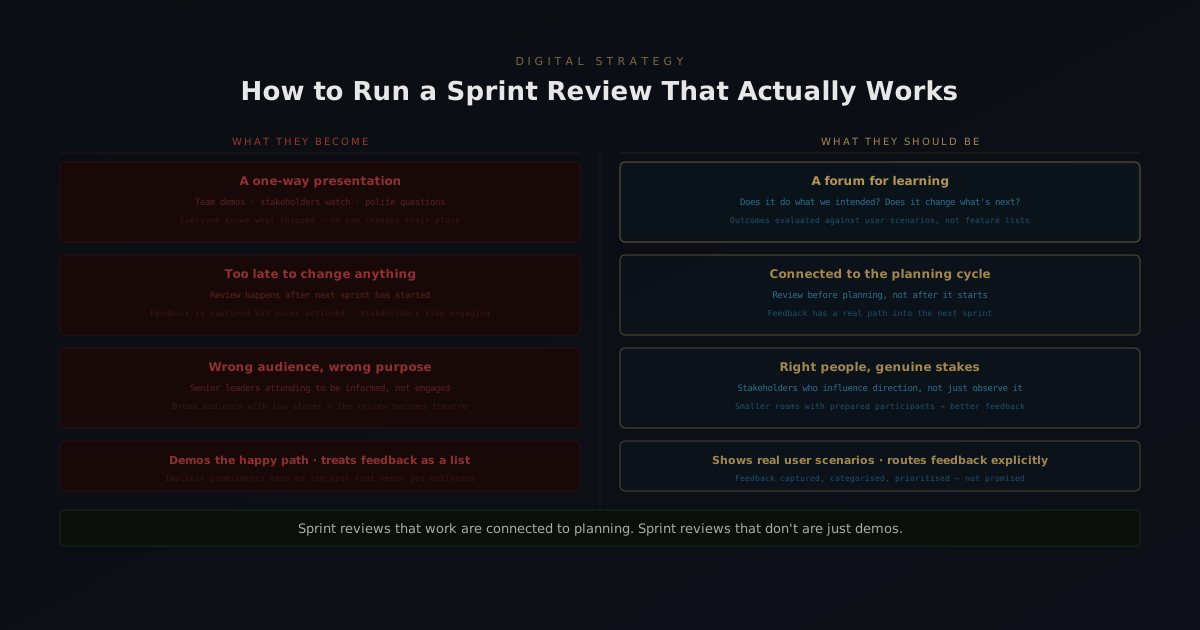
The most common failure mode is the review becoming a one-way presentation. The team demos completed work; stakeholders watch; there's a polite round of questions. Everyone leaves knowing what shipped, but the conversation stops there.
A close second is reviews that happen too late to influence anything. By the time you demo the sprint just completed, the next sprint is already planned, sometimes already started. Feedback from the review, however good, isn't actually actionable until several weeks later. This gradually trains stakeholders to stop giving real feedback because they've learned it doesn't change anything.
A sprint review is a forum for learning, not reporting. The specific questions it should answer:
If your review isn't generating answers to at least one of these questions, it's not fulfilling its purpose.
Sprint reviews work best when the people in the room have genuine stakes in the direction of the product, not just observers or status recipients. That means product, design, engineering, and the stakeholders whose priorities and requirements shape what comes next.
It does not mean every senior leader in the organisation. Broad attendance without genuine engagement turns the review into theatre. Smaller rooms with the right people, who are prepared to give substantive feedback, produce better outcomes than large audiences who are there to be informed.
Show working software in user scenarios, not feature checklists. The difference matters: feature checklists tell stakeholders what was built; user scenarios help them evaluate whether it solves the right problem in the right way.
Walk through how a real user would encounter this feature. Where does it appear? What does it replace or complement? What happens if someone does something unexpected? This kind of demonstration surfaces mismatches between what was built and what was intended far more reliably than a polished walkthrough of the happy path.
Feedback from sprint reviews should be captured, categorised, and routed, not promised. One of the most damaging patterns in sprint reviews is the implicit commitment: a stakeholder raises a concern, the product manager says "we'll look at that," and the stakeholder leaves expecting to see it addressed in the next sprint.
Better practice is to be explicit about how feedback feeds into the process. Collect it. Add it to the backlog with appropriate context. Prioritise it in the normal way. If feedback from the review consistently fails to influence what gets built, that's a signal that the review and the planning process are disconnected, a structural problem worth fixing.
The most important change most teams can make to their sprint reviews is to schedule them earlier relative to sprint planning. If reviews happen on Friday and planning happens on Monday, there's a real chance that feedback can influence what comes next. If reviews happen mid-sprint or after the next sprint has started, the feedback loop is broken before it begins.
Sprint reviews that work are connected to the planning cycle. Sprint reviews that don't are just demos.