I've spent a lot of time in businesses that believed they had a modern digital operations setup. They had Salesforce. They had an ERP. They had a data warehouse, a BI tool, a project management platform, and at least one workflow automation tool that nobody fully understood. They had fifteen different systems doing fifteen different jobs.
What they didn't have was a stack. They had a collection. And collections don't scale — they collapse.
The difference between a collection of tools and an ops stack is the same as the difference between a bag of parts and a machine. The parts don't do anything on their own. The machine produces an outcome. Most digital businesses have spent the last decade buying parts. Very few have built a machine.
The three layers of a real ops stack
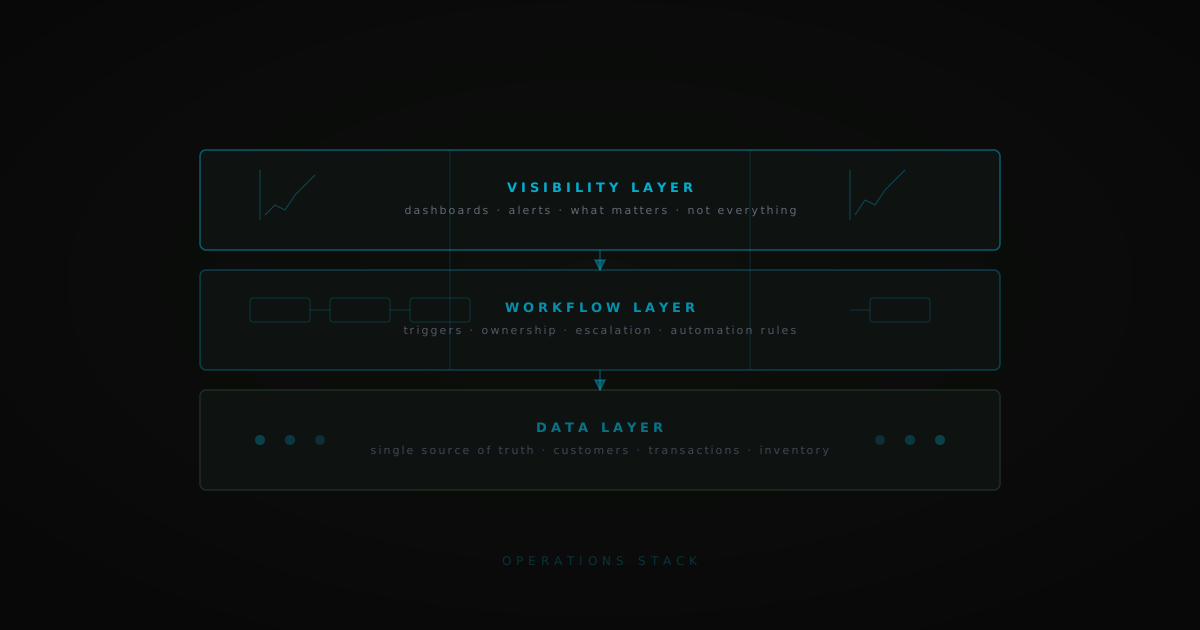
A functional operations stack has three layers, each dependent on the one below it. Skip one and the whole thing becomes unreliable.
Layer one: data. A single source of truth for what's actually happening in the business. Not multiple dashboards that disagree. Not reports that take three days to produce. One place where customer data, transaction data, inventory data, and operational data live in a form that's accessible and trustworthy. This is the foundation. Everything above it is only as good as the data underneath it.
Most businesses I work with have a data layer — but it's fragmented. Finance uses one system, operations uses another, marketing uses a third, and nobody is sure which number is right when they differ. That's not a data layer. That's several data layers in conflict.
Layer two: workflow. The logic layer that sits on top of the data and determines what happens next. Who owns what. What triggers what. How exceptions are handled. How decisions escalate. A workflow layer is how you turn data into action without relying on a human to manually connect every dot.
The workflow layer is where most businesses fail. They have automations that were set up years ago, nobody fully understands, and occasionally break in ways that take a week to diagnose. Or they have humans manually moving information between systems because the automations were never built. Either way, the workflow layer is where operational debt accumulates fastest.
Layer three: visibility. The layer that surfaces what matters, to the people who need to act on it, in time to do something about it. Not dashboards that show everything. Not weekly reports that arrive on Friday. Real-time or near-real-time visibility into the metrics that drive decisions — with alerts that tell the right person when something needs attention.
The question isn't whether you have visibility. It's whether the right person sees the right thing in time to do something about it.
Why most companies only invest after the first major incident
The ops stack is invisible when it works. A well-connected data layer, clean workflow automation, and proper visibility infrastructure feel like nothing — because the problems that would have happened aren't happening. You don't see the stock-out that was caught two days early. You don't see the customer complaint that was routed correctly. You don't see the pricing error that was flagged before it went live.
What you do see is the one that slipped through. The overnight pricing system failure that nobody spotted until Monday morning. The customer segment that fell out of the CRM sync three months ago and nobody noticed. The fulfillment workflow that was silently failing for six weeks before a customer complained publicly.
This is why operational infrastructure investment almost always follows a crisis. The business didn't feel the pain of not having it until something broke badly enough to be undeniable. By that point, the cost of fixing it is much higher than the cost of having built it properly in the first place — and the credibility to demand investment has been funded by a disaster nobody wanted.
What connected ops actually looks like
A connected ops stack doesn't mean one platform or fewer tools. It means the layers talk to each other in a way that produces reliable outcomes. Specifically:
- When something changes in the data layer, the workflow layer responds automatically — no human has to notice and act
- When the workflow layer acts, the result is recorded back in the data layer — so the action is traceable and the loop closes
- The visibility layer shows exceptions and anomalies, not just the current state — so people know when something needs attention, not just what happened
This sounds simple. It isn't. Building it requires making decisions about where the single source of truth lives, which system owns which process, and what the escalation path looks like when something fails. Most businesses haven't made those decisions explicitly. They've accumulated tools that partially overlap and hoped the gaps don't matter.
The gaps always matter. They just take time to show up.
The stack audit question that usually reveals everything
When I'm doing an initial assessment of a business's ops infrastructure, I ask one question: if your pricing system failed overnight, how long would it take you to know?
For a business with a connected ops stack, the answer is usually minutes — because visibility layer alerts are in place and someone is notified automatically. For most businesses, the answer is hours or days — because the failure would only be discovered when someone manually checked, or when a customer complained, or when the Monday morning report looked wrong.
Your answer to that question tells you more about the health of your ops stack than any tool audit. The tools don't matter. The question is whether the system knows when it's failing.