Every business I've worked with in the last five years describes itself as digital-first. Most of them are not. What they are is digital-adjacent, they have software, they have apps, they have dashboards. But the software is recording what humans decided, not driving what humans do. The digital layer is downstream of the process, not upstream of it. That's the difference.
Digital-first operations means the digital system is the source of the trigger, the decision, and the record. Not the tool that captures the decision after it was made in a meeting. Not the platform that receives the data after the process ran. The system itself initiates, routes, and closes the loop.
The clearest way to see the difference
Take a customer complaint. In a traditional operation, the complaint arrives, a human reads it, decides it's urgent, sends it to the right team, and the team resolves it. The digital tool records the complaint and the resolution, but the human is the engine. The system is the filing cabinet.
In a digital-first operation, the complaint arrives. The system reads it, classifies the urgency based on language, history, and customer value, routes it to the appropriate team, sets an SLA timer, and sends a confirmation to the customer, all before a human has looked at it. The human sees a pre-classified, pre-routed, pre-timed ticket. They resolve it. The system records the outcome and updates the customer automatically.
The output is similar. The structure is completely different. In the first case, remove the human and nothing works. In the second case, the human is doing the part only a human can do, judgement and resolution, and the system is doing everything else.
Digital-first means the system is the engine. Not the filing cabinet.
Why most businesses are digital-adjacent, not digital-first
The reason most businesses end up digital-adjacent rather than digital-first is that they digitise their existing processes without redesigning them. They take the process that was happening in spreadsheets and put it in a system, but the logic of the process stays the same. The triggers are still manual. The routing is still manual. The escalation is still manual. The software is now involved, but the process is unchanged.
Digital-first requires asking a different question at the start: not "how do we put this process into software?" but "if we were designing this process today, knowing what software can do, what would it look like?" That question almost always produces a different answer. The manual steps in the current process aren't there because they're necessary, they're there because they predated the technology that would have made them unnecessary.
What the redesign looks like in practice
The shift to digital-first operations tends to follow a pattern across different types of business:
The trigger moves from human to system. Instead of a manager noticing that stock is low and raising a purchase order, the system detects the stock level crossing a threshold and raises the order automatically. The human approves or overrides, they don't initiate.
The routing becomes rule-based. Instead of a team leader assigning incoming work based on capacity and context, the system assigns it based on skills, queue depth, SLA, and priority. The team leader manages exceptions, not every case.
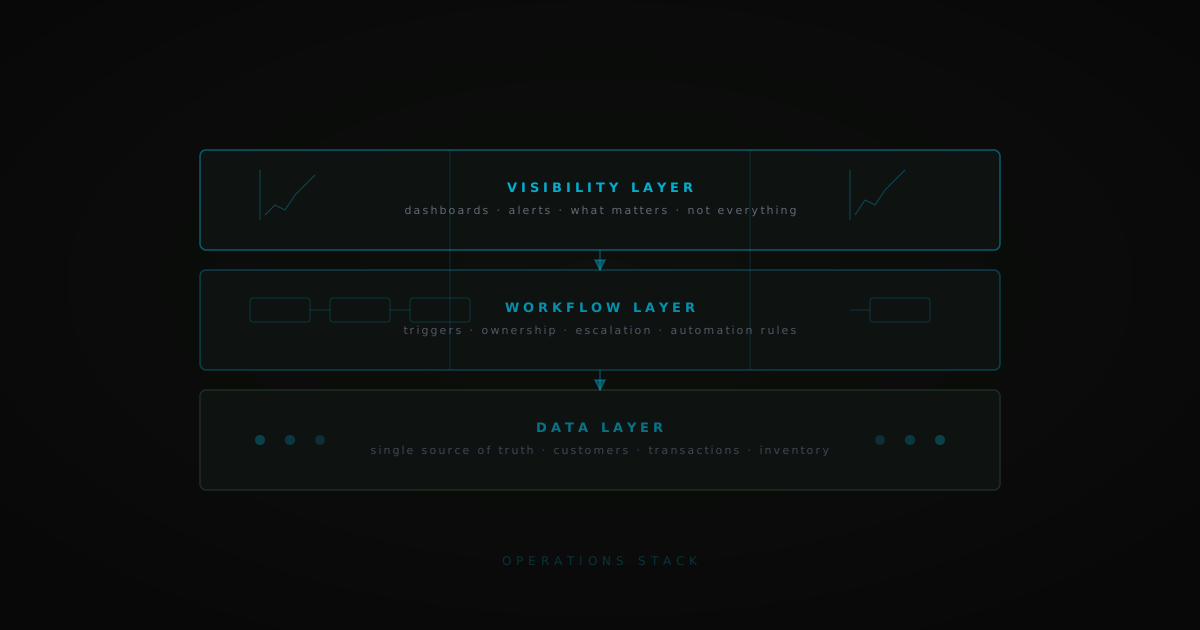
The visibility becomes proactive. Instead of a dashboard that shows what happened, an alert system tells the relevant person when something requires attention. The human doesn't have to look for the problem, the system surfaces it.
The loop closes automatically. Instead of someone manually marking a case as resolved and sending a follow-up, the system detects the resolution, updates the record, and sends the communication. The human doesn't need to remember to close it.
The hard part isn't the technology
The hard part of moving to digital-first operations is not technical. It's the process redesign, specifically, the willingness to question whether each manual step in the current process actually needs to be manual. Most manual steps exist for one of three reasons: the decision requires genuine human judgment, the data needed for automation doesn't exist yet, or nobody has got around to automating it.
The first category is real and should stay manual. The second requires an investment in data infrastructure before automation is possible. The third is where most of the opportunity lies, it's also where most businesses never look, because the process is working well enough that nobody is motivated to change it.
Digital-first operations doesn't require a transformation programme. It requires a systematic audit of every manual step, an honest answer to why it's manual, and the willingness to change the answer when the reason is "because that's how we've always done it."