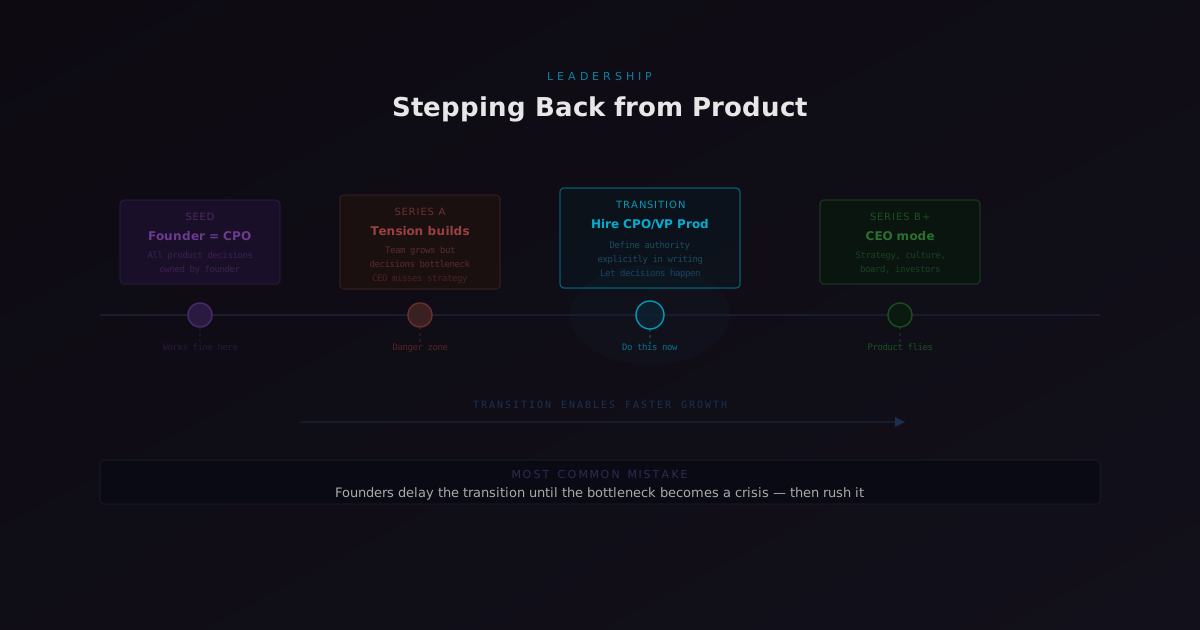
Most founders build their companies because they had a product idea they couldn't stop thinking about. The product is where their instincts are sharpest, their energy is highest, and their sense of identity is most invested. Which is exactly why stepping back from product is so hard, and why so many founders do it badly.
Why founders stay too long
The standard story is that founders stay in product because they don't trust anyone else to understand the vision. And there's truth to that. Founders do have a clarity about what they're building and why that's very hard to transfer. But there's a more uncomfortable reason too: product is where they're most comfortable, most confident, and most in control. Stepping back means stepping into territory, managing a larger organisation, fundraising, stakeholder relationships, where they may feel much less sure of themselves.
The result is that product stays founder-led long after the team has grown beyond what one person can effectively oversee. Decision-making slows. The product team becomes dependent on the founder for direction rather than developing its own judgment. And the company's strategy suffers because the CEO is spending their best energy on product instead of on the bigger picture.
What it costs the business
When a founder stays too long in product, several things tend to happen. Product managers don't develop real autonomy, they become message carriers. The roadmap reflects the founder's instincts rather than a structured process that synthesises market intelligence, customer feedback, and business priorities. Engineers and designers lose initiative because they're waiting to be told what to build.
The company also loses strategic horsepower. A CEO who is intellectually and emotionally invested in product decisions has less bandwidth for the things that only a CEO can do: building the board relationship, shaping company culture, developing the leadership team, managing external stakeholders. These aren't optional. They're how scale happens.
The signs it's time
The trigger is rarely a single moment. But the signals are usually visible before founders acknowledge them:
- Product decisions routinely wait for your input to move forward
- You're attending more product meetings than you have bandwidth for
- The product team can't make decisions without you in the room
- You're missing strategic meetings because of product commitments
- Your co-founders or board are nudging you toward stepping back
If two or more of these are true, the transition is overdue. The longer you wait, the harder it becomes because the patterns you've established in the team become more entrenched.
What stepping back actually means
This is the part that most founders get wrong. Stepping back doesn't mean withdrawing from product entirely. It means shifting from decision-maker to direction-setter. The founder's job becomes establishing the strategic context, the why, the values, the north star, and then creating the conditions for a product leader to make good decisions within that context.
This requires a very different kind of engagement. Instead of being in every product review, you're in the quarterly product strategy session. Instead of approving every major feature, you're setting the criteria for what a major feature should achieve. Instead of hiring individual product managers, you're hiring the leader who hires them.
Finding and onboarding the right product leader
The most important thing is to hire someone who can own the product function, not a senior PM who still depends on you for direction. A true CPO or VP of Product has their own point of view on how product should be run. They will challenge your instincts sometimes. That's not a problem. That's the job.
Onboarding is where most founder handoffs fail. There needs to be an explicit conversation about authority: what decisions the incoming leader owns, what decisions require founder input, and what decisions require board-level alignment. Written down, not just agreed verbally. And then the founder has to let those decisions be made, including some that they would have made differently.
What you do with the freed capacity
The best thing about stepping back from product is what you get to step into. Founders who make this transition well typically find that the company moves faster because decisions are being made by someone whose full-time job is making them. They also find that their own energy returns, because they're no longer stretched across a role that has grown beyond what one person can hold.
The CEO job at scale, building a high-performance leadership team, shaping the culture, managing the board and investors, developing strategy, is a genuinely hard and interesting job. Most founders who delay the transition end up wishing they'd made it earlier. The companies that grow fastest tend to be the ones where the founder found the confidence to let go of the thing they built, so someone who's brilliant at it can take it further.