Technology board reports are, as a category, some of the least effective board papers that senior technology and digital leaders produce. They tend to lead with infrastructure, bury the business implications, use jargon that alienates non-technical directors, and fail to surface the decisions that boards actually need to make.
The consequences are predictable: boards disengage from technology oversight precisely when their engagement matters most, non-executive directors feel unable to challenge or scrutinise management, and technology risks go undetected until they become crises.
This guide is for technology, digital, and data leaders who want to write reports that boards find genuinely useful, reports that inform, that build confidence, and that get the decisions made.
Understand What the Board Needs From You
Before writing anything, it is worth being clear about the board's role in relation to technology. The board's job is not to manage technology. It is to provide oversight: to satisfy itself that management has a credible strategy, that material risks are identified and managed, and that significant investments are justified. The board needs enough information to fulfil this oversight role, not a comprehensive operational update.
A common failure mode is writing a board report as if you are reporting to a technology steering committee. Operational detail, system-level metrics, and project granularity may be appropriate for that audience. For the board, they obscure the signal in the noise. Ask yourself, for each section you are considering: does the board need to know this to fulfil its oversight responsibilities? If not, it probably does not belong in the main report.
The Structure That Works
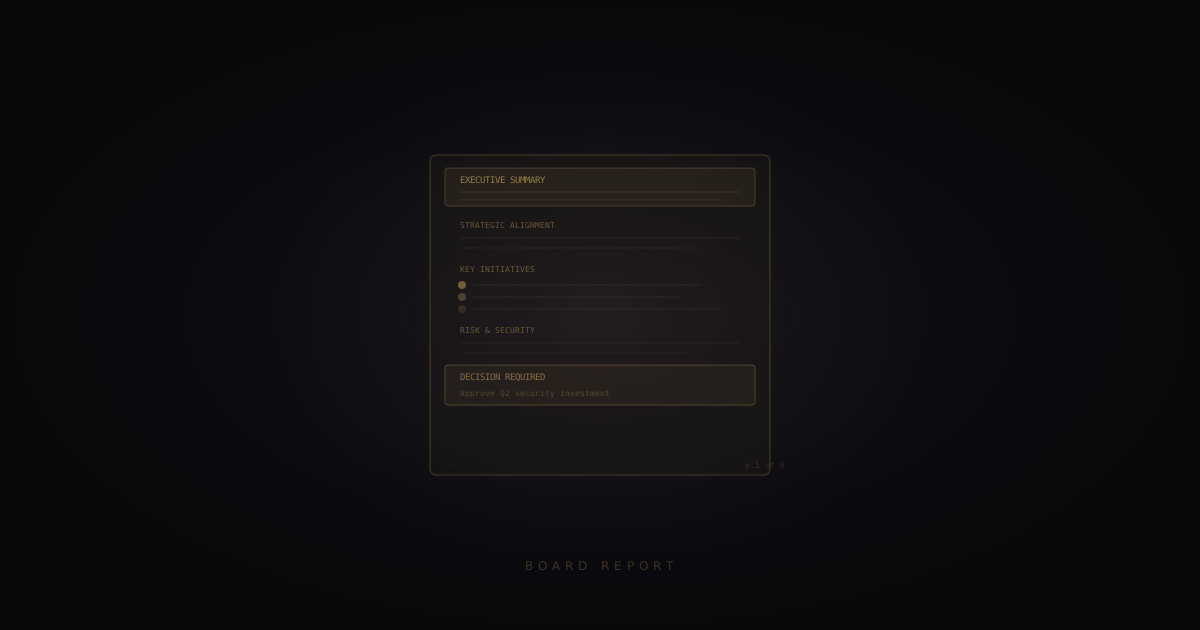
A board technology report that consistently gets good engagement typically covers six areas in the following sequence:
1. Executive Summary
One page. No more. Cover the three to five things the board needs to take away from this report, including any decisions required. Write this last, when you know what the report says, but position it first. Board members often read only the executive summary before the meeting. The summary needs to stand alone as a complete communication, not as a contents page.
2. Strategic Alignment
Connect the technology agenda explicitly to the organisation's strategic priorities. If the board approved a three-year strategy focused on customer experience, operational efficiency, and international growth, your technology report should map current and planned initiatives to those priorities. Directors who see the technology agenda reflected through the lens of what they have already approved are far more engaged than those trying to evaluate a technology programme on its own terms.
3. Progress Against Plan
For major programmes and initiatives, report on progress against the plan the board previously approved. Use a simple RAG (red, amber, green) status indicator with brief commentary. The board needs to know: are we on track, and if not, what is happening about it? Honesty here is essential, boards that receive consistently optimistic progress reports and then discover a project has fundamentally failed will lose trust in management's reporting far faster than boards that receive honest updates including bad news and credible recovery plans.
4. Risk and Security
Technology and cyber risk are among the most significant risks most organisations face, and boards have a specific duty to oversee them. This section should cover the material technology and cyber risks the organisation faces, the status of controls and mitigations, any significant incidents or near-misses since the last report, and any emerging risks requiring board attention.
Avoid technical jargon in this section, translate risk into business impact. "We experienced a distributed denial of service attack on 14 March. The attack was mitigated within four hours with no customer data compromised. The incident identified a gap in our incident response capability which has since been addressed" is far more useful than a description of the technical nature of the attack.
5. Investment and Value
Report on technology spend against budget, and where material programmes have a committed business case, update the board on whether the expected value is being realised. This is an area where many technology leaders are reluctant to report, partly because the honest answer is often "we do not know yet" and partly because measurement disciplines were not in place when the investment was approved. Build the measurement in from the start so you can report with confidence later.
6. Decisions Required
Be explicit about what you are asking the board to decide, note, or approve. A board paper that contains a decision point buried in paragraph five of section four will not get that decision made. Every paper that requires a decision should end with a clear statement: "The board is asked to approve X" or "The board is asked to note Y." If you are asking for nothing, say so, the paper is for information.
Tone and Language
The language of a board technology report should be the language of business, not technology. Test your draft against this: could a commercially experienced non-executive director with no technology background read this and understand what you are telling them? If not, rewrite the parts that fail that test.
Specific language traps to avoid:
- Acronyms without explanation (even common ones, not every NED will know what ERP means)
- Technical system names without explanation of what they do and why they matter
- Passive voice constructions that obscure accountability ("it was decided" rather than "management decided")
- Optimistic framing that softens bad news ("we faced some challenges" rather than "the project overran by six months and requires additional investment of £300,000")
What Boards Find Most Useful
The most consistent feedback from non-executive directors about technology board reports is that they want:
- Clarity about what is going well and what is not
- Explicit connection between technology and business outcomes
- Clear risk communication in business terms
- Actionable recommendations and explicit decisions required
- Brevity, most boards receive lengthy board packs and technology reports that run to thirty pages are rarely read in full
They do not want: comprehensive operational updates, extensive project status tracking, technical architecture detail, or assurance that management has everything under control without evidence that supports that assurance.
The Audit and Risk Committee Dimension
Many boards delegate detailed technology and cyber risk oversight to an audit and risk committee (or equivalent). If your organisation has this structure, the reports for the committee and the full board should be different documents with different purposes. The committee gets more detail on risk and compliance; the full board gets the strategic and investment picture with a summary of the committee's conclusions.
Build a relationship with the committee chair. Their questions in committee will shape what reaches the full board. Their confidence in management's approach to technology risk is one of the most important factors in how well boards are able to oversee this domain.
Building Board Confidence Over Time
Trust is built through consistent, honest reporting over multiple board cycles. Boards that receive technology reports that are always positive become sceptical. Boards that receive honest reports including setbacks, where management demonstrates they have identified issues early and have credible plans to address them, develop confidence in the technology function's leadership.
The ambition should not be to impress the board with the scale of the technology programme or the sophistication of the tools being deployed. It should be to ensure that every director leaves every board meeting feeling appropriately informed about the organisation's technology position, confident that what they need to know has been communicated, and clear about any decisions or oversight actions required of them.
That is a high bar, but it is the right one. Technology leadership that achieves it is doing its job.